The Wandering Bee — a mindfulness exercise in purposeful motion
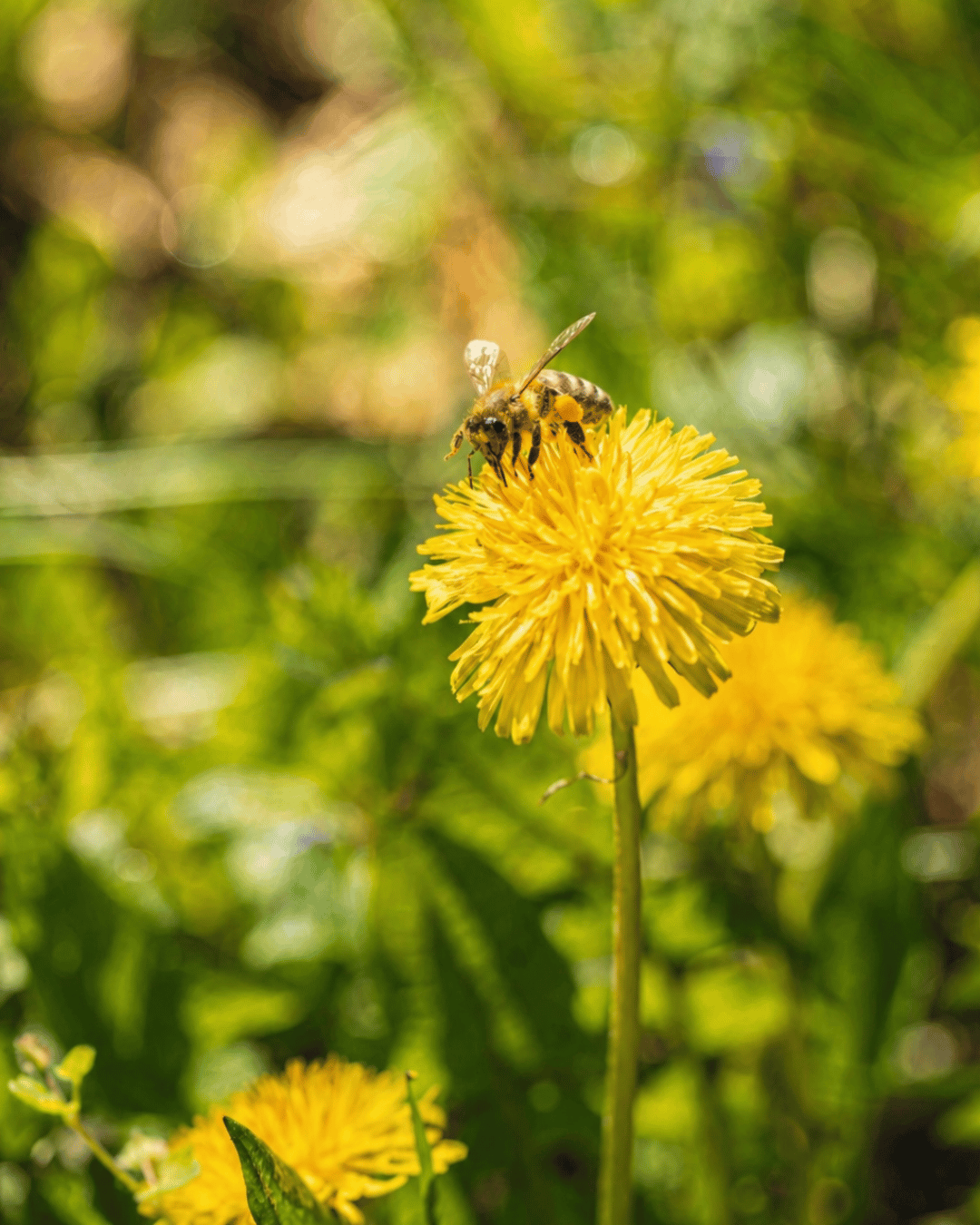
The Wandering Bee
Some movements are easy to miss because they are not loud or dramatic.
A bee moving from flower to flower. A cyclist slowly disappearing around a bend in the path. A branch stirred by wind. A shadow crossing the pavement, though no one is pushing it along.
Each of these movements carries something quiet, but clear. We do not always know its destination. We do not need to. For a moment, it is enough to notice that something is on its way.
This card from the Urban forest bathing series invites exactly this kind of observation: watching motion that is not the same as rushing.
Mindfulness exercise: purposeful motion
For five minutes, watch something that moves with intention: a bee between flowers, a cyclist on a path, a branch stirred by wind, or a shadow crossing the pavement.
Do not follow it to guess its destination.
Notice the movement itself: pauses, turns, returns, and the small decisions along the way.
This can be a very simple exercise. You do not need a special place or a long walk. A lawn, a park, a balcony, a pavement under a tree, or a small patch of green near your home is enough.
A bee does not hurry the way we do
A bee looks busy. It moves from one flower to another, stops for a moment, changes direction, disappears into the yellow of a dandelion, and appears again.
But its movement does not feel like human hurry. There is no tense sense of “I must catch up.” There is focus. There is response to what is nearby. There is attentive movement between possibilities.
This can be a useful image for us, especially when we are trying to return to ourselves after a period of overload, distraction, or uncertainty.
We can move slowly and still move with intention.
What does it mean to move with intention?
Purposeful motion does not have to mean a big decision. It does not have to become a plan for your whole life.
Sometimes it only means the next small step.
Going outside for a walk. Answering one message. Returning to a project that has been waiting quietly. Clearing a desk. Saying no to what scatters your attention. Saying yes to something that has been calling softly for a while.
In nature, movement is rarely perfectly straight. A bee does not fly in one perfect line. Wind does not move a branch according to a plan. A shadow does not jump straight to the end of the day.
Movement can curve. It can pause. It can return. It can correct itself gently.
Maybe that is why it feels true.
Two reflection questions
After a short observation, you can write down or simply hold these two questions:
Can I move slowly and still move with intention?
This is not about doing more. It is about noticing whether my steps are still connected to what matters.
What helps me return to my path when I lose it?
Maybe silence helps. Maybe a conversation. Maybe a walk. Maybe a morning without a phone. Maybe one sentence written in a notebook. Maybe returning to the body: breath, feet on the ground, light on the face.
It is worth knowing our small ways of returning.
Mindfulness in the city can still be alive
You do not have to travel far to practise contact with nature. In spring, even a small part of the city can be full of movement.
Dandelions appear beside paths. Insects visit flowers. Leaves unfold day by day. Birds carry blades of grass, small twigs, and other tiny findings. The world is not still, but it is not always rushing.
This is why urban nature observation can be so helpful. It teaches us to tell the difference between movement and hurry.
They are not the same thing.
Week 18 card: The Wandering Bee
This card is part of a series of simple mindfulness exercises inspired by nature and urban forest bathing.
You can return to it when you feel stuck, but do not want to push yourself. Or when there are many directions in front of you and you need to notice, calmly, which one is truly calling.
You do not have to know the destination yet.
For today, it is enough to notice the movement.