Mindfulness in Nature: Where to Begin If You Don't Meditate
Many people hesitate as soon as they hear the word “mindfulness.” It can sound like meditation, sitting in silence, closing your eyes, and trying to calm your thoughts. For some people that feels inviting. For others it sounds too formal, too difficult, or simply not like something that belongs to them.
So it is worth saying this clearly: mindfulness in nature does not have to begin with meditation. It can begin with something much simpler. Looking at a tree. Walking a few steps without your phone. Noticing light on leaves. Giving one moment your full attention instead of passing straight through it.
If contact with nature matters to you, but the language of meditation does not feel natural, this is still a place where you can begin.
Mindfulness does not have to look a certain way
Sometimes what puts us off is not the practice itself, but the idea we have about it. We imagine that we should sit up straight, quiet the mind, have more time, and know exactly what we are doing. When none of that happens, it is easy to assume that mindfulness is simply not for us.
In nature, mindfulness can be much more ordinary. It is not about doing something perfectly. It is about recovering contact with what is here. With the body. With the breath. With space. With something living beyond the screen and beyond the rush.
In practice, that can mean:
- slowing your pace for a minute,
- looking more closely at one place,
- feeling the temperature of the air,
- noticing the sounds around you,
- returning to the senses instead of the next thought.
That is mindfulness too. Quiet, simple, and much more rooted in everyday life than in method.
Why nature can be a gentler place to begin
For many people, it is easier to be mindful in relation to something concrete than in relation to “the self.” Nature offers that kind of anchor. You do not have to sit with your eyes closed and observe everything happening in your mind. You can let your attention rest on something outside you.
For example:
- the movement of branches,
- the rhythm of your steps,
- light shifting across the pavement,
- the smell of rain,
- birdsong,
- the texture of bark,
- the changing sky during the day.
This often feels gentler because it does not demand full inner stillness right away. Attention has something to hold onto. That is one reason contact with nature can be such a good beginning for people who do not meditate and do not want to start with a formal practice.
If you want to look at this more broadly, you can also read You Don’t Need to Go to the Forest: How to Return to Nature Where You Already Are. It is a good first step for anyone looking for a calm way into the topic without big expectations.
Where to begin if you do not want to meditate
The best place to start is with practices that are small, concrete, and easy to do right away. This is not about changing your whole life in one day. It is about finding a form of contact with nature that actually fits into your rhythm.
1. Choose one thing to look at
Do not try to notice everything. Choose one thing: a tree, a patch of sky, a puddle, a branch, a strip of grass by the pavement. Stay with it for a moment. See what changes when you do not turn your attention away after one second.
It is simple, but it shifts you out of the habit of scanning everything too quickly.
2. Walk a little slower than usual
You do not need a separate mindfulness walk. A small part of your route is enough. A few slower steps. No rush. Breathing. Feeling the ground under your feet.
If that kind of practice speaks to you, you might also like Unhurried Path, which shows how much can change when the only thing you do is slow down.
3. Notice three sounds
This is one of the simplest ways back into presence. When you are outside, pause and listen. Choose three sounds you can hear right now. They can be natural sounds or city sounds. Do not judge them. Just notice them.
That small gesture helps you come out of your head and back into your surroundings without the pressure of having to “calm down properly.”
4. Begin with one place you can return to
Mindfulness is often easier to build through returning than through constantly searching for something new. It might be a bench, a part of a small square, a tree by your route, or a window with a view of the sky. When you return to one place, you begin to notice more.
In that sense, mindfulness is not about having an exceptional experience. It is about returning often enough for a relationship to form.
5. Use a gentle prompt instead of trying to do it right
If it feels hard to begin on your own, that does not mean anything is wrong. Sometimes it is simply easier to enter a practice when someone offers one small direction.
That is one reason Urban Bathing exists — a weekly series of cards with short exercises that help people return to nature without pressure and without leaving the city. It is a good fit especially when meditation feels too abstract, but you still sense that you need a calmer relationship with something living and real.
What can help at the beginning
At the beginning, what helps most is permission to keep things simple. You do not have to feel deeply calm right away. You do not have to be especially inspired. You do not need perfect conditions. Mindfulness in nature can be very ordinary.
It also helps to think of it not as a task, but as a return:
- to the body,
- to the breath,
- to the surroundings,
- to what is concrete,
- to a moment that asks nothing more than to be noticed.
If the urban version of this practice feels close to you, you can also visit Urban Forest Bathing: How to Practice Shinrin-yoku Without Leaving the City. It is a more method-based introduction, but still grounded in ordinary daily life.
Mindfulness in nature can be a beginning, not an obligation
The most important thing may simply be this: you do not have to begin by becoming “someone who meditates.” You can begin by becoming someone who pauses for a moment. Someone who looks. Listens. Returns to one place. Gives a few steps without distraction.
That is enough to begin building a more living relationship with nature.
If you want to go a little further, you can:
- return to the materials library if you want a broader way into the project,
- visit Urban Bathing if you prefer concrete exercises,
- or begin with one very simple question: what living thing can I notice around me today?
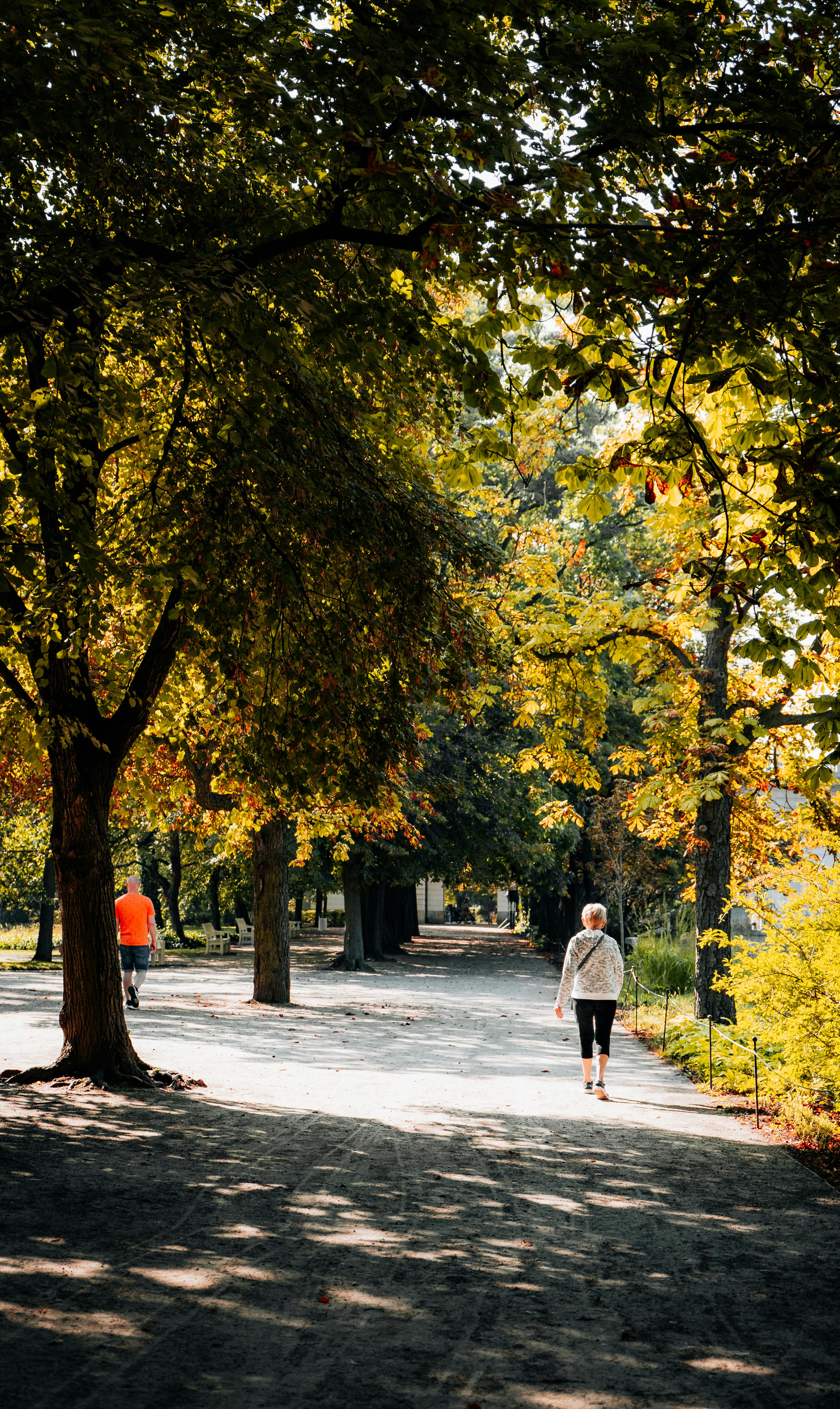
Cover photo: Marta Zwierzchoniewska, Pexels.